


Article: Wool Structure
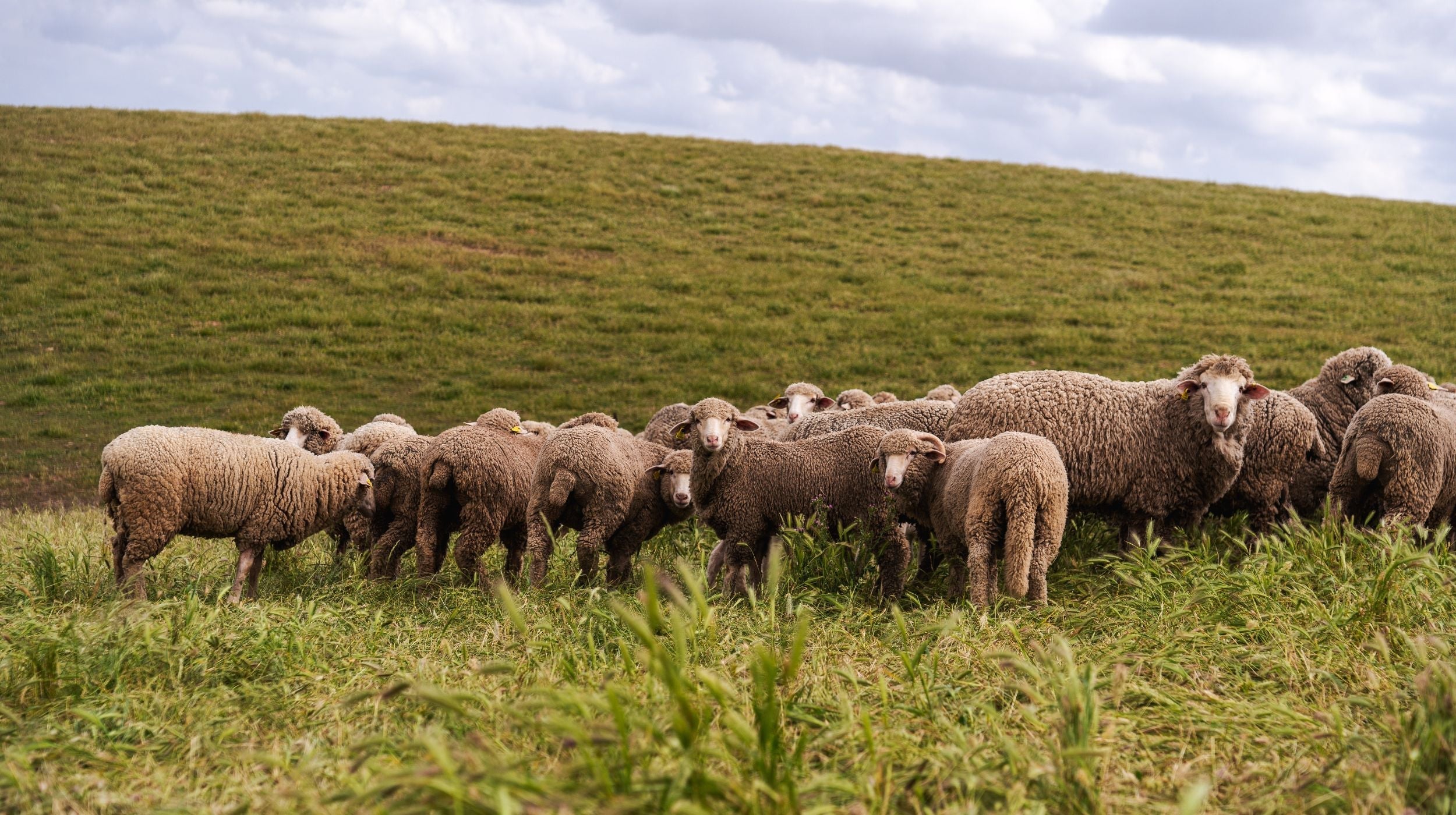
Wool Structure
What is really inside a wool fiber?

Understanding the structure of merino wool (and why it matters)
When we touch a skein of wool, we usually think of fairly simple things: softness, warmth, texture.
But inside each fiber, something much more interesting is happening.
Wool is not simply “sheep’s hair.” It is a complex biological structure, designed by nature to protect the animal from the cold, heat, moisture, and wind.
And understanding how it works completely changes the way we look at a fiber… and also the way we understand a yarn.
This month at Wooldreamers, we are talking about Origen, our superfine merino wool, one of the finest produced in Europe, so we thought it was a good time to start from the beginning:
How is a wool fiber really made?
A fiber much more complex than it seems.
If we could observe a wool fiber under a microscope, we would see that it is not a uniform material.
It is made up of several layers and structures that work together to create something quite surprising: a natural material capable of insulating, regulating moisture, recovering its shape, and remaining durable for years.

These are the main parts:
1. The cuticle: the protective surface
The outermost layer of the fiber is called the cuticle.
It is made up of small microscopic scales that overlap one another, like the shingles on a roof.
Although we cannot see them, these scales greatly influence the behavior of the wool. Among other things:
* they protect the fiber
* they influence how it interacts with water
* they help the wool not accumulate dirt easily
Many particles remain on the surface and are shed with movement or air.
That is why wool garments often need less washing than we imagine.
2. The cortex: where elasticity lives
Beneath the cuticle, we find the cortex, which is the structural part of the fiber.
Here, the cells are organized longitudinally, forming keratin structures.
This organization is responsible for one of the best-known properties of wool:
its natural elasticity.
When a wool fiber is stretched, the keratin chains lengthen.
When the tension is released, they return to their original position.
This explains why wool garments easily recover their shape even after many uses.
3. Microfibrils and matrix: strength and flexibility
If we observe the fiber even more closely, we discover that it is not completely homogeneous either.
It is made up of microfibrils, small protein subunits that group together and are held together by a matrix that acts as a natural “cement.”
This internal architecture allows wool to combine something quite difficult to achieve in textile materials:
- strength
- flexibility
- recovery capacity
In addition, this structure influences how the fiber absorbs and releases moisture, which helps maintain a stable microclimate when worn.
Wool can absorb water vapor without feeling damp to the touch.
4. Natural crimp: air as insulation
There is another characteristic feature that we can see without a microscope: the fiber’s natural crimp, which in English is called crimp.
That wavy shape is not there for aesthetics.
Each crimp creates small spaces where air is trapped.
And air is one of the best insulators that exist.
More crimp means more trapped air.
More air means better thermal insulation.
That is why wool keeps you so warm without needing to be heavy.
So, what does it mean for wool to be superfine?
When we talk about the fineness of wool, we are talking about the fiber diameter, measured in microns.
A micron is one-thousandth of a millimeter.
To put it in context: coarse wool can be above 30 microns, many medium merino wools in Spain are between 20 and 24 microns, and the finest merino wools fall below 19 microns.
In the case of Origen, we are talking about wool with an average fiber diameter of around18 microns, certified by a laboratory endorsed by the IWTO.
But fineness alone is not everything.
What is really interesting is when that fineness is combined with good fiber length, balanced crimp, and structural resilience.
And that depends largely on the genetics of the flock.

The work behind Origen
Six years ago, Juan and Jesús decided to try something unusual:
improve the fineness of merino without losing the character of Spanish merino.
To do this, they began a very careful selection process, crossing the best Spanish merino genetics with Australian Saxon Merino, one of the finest lines in the world.
The result is wool that combines:
-
the fineness and length of the Australian genetics
-
with the crimp and resilience of the Spanish genetics
A combination that is uncommon in Europe.
And also something that matters a lot to us:
locally produced.
This avoids having to bring this type of wool from other continents and allows us to work with nearby flocks, with traceability and direct care for the animal and the fiber.

Understanding the fiber changes the way you knit
When you know the structure of wool, you begin to better understand many things that happen while you knit.
Why certain fibers recover their shape. Why others are more elastic. Why some wools keep you so warm with so little weight.
Suddenly, wool stops being just a material. It begins to be a complex system that comes from the field, passes through our hands, and ends up becoming a garment.



